
The Caltrain budget for FY2024 and FY2025 was adopted by the Board on June 1, 2023. The FY2024 budget shows Caltrain’s average daily ridership as increasing from today’s roughly 18,600 riders per weekday to a projected 28,300 average riders a weekday in 2024. We regard this projection to be unrealistic.
Despite the fact that only 92 Caltrain trains per weekday operated pre-pandemic, at a time when Caltrain’s ridership was almost four times what it currently is, the Budget shows Caltrain as continuing to run 104 trains per weekday in FY2024. In part because of this increase in the size of the operation, the FY2024 budget shows operating expenses as increasing by 6.7% and administrative expenses by 21% over the FY2023 level.
Read more here
BATWG has written articles about Caltrain in its last two newsletters <https://batwgblog.com/newsletter-archive/> [See ”For Caltrain, More Hard Work to Come”, March 2023 and “Caltrain Needs to Pull it All Together”, April 2023]. We’ve also addressed letters to the Board of Directors which cited critical issues affecting the budget, important ridership recovery issues, and operating efficiency matters. In both newsletter articles we addressed the major traveler shifts and other problems facing Caltrain in its attempts to reverse the dramatic ridership losses post-COVID, while successfully transitioning to electrified service in 2025. We posed nine important budgeting questions which we believe warranted clear and comprehensive responses from staff and which we are convinced would have facilitated Board deliberations and consideration of alternatives. None of BATWG’s questions nor its other strategic and operational observations were presented on June 1st or apparently considered by Caltrain in the FY24 and FY25 budget decisions.
Because of the drop in ridership, Caltrain’s operating expense per passenger has risen dramatically since the pandemic and in FY22 was over 5 times what it was in pre-COVID FY2019. These recent rail service cost trends are not sustainable. San Francisco and Silicon Valley office workers are not returning in pre-pandemic numbers. Remote work and hybrid office protocols are likely going to be with us for a long time. This suggests that Caltrain needs to more aggressively adjust its services and operating budgets to the new travel patterns and ridership conditions it now faces.
Diesel Train Operation: Caltrain apparently plans to continue diesel operation through at least 2030. BATWG believes that once EMU service begins Caltrain should get out of the diesel business. Operating both diesel and electric trains would add unnecessary cost and inhibit further service improvements like level boarding. Also, operating both diesel and electric trains would require two separate lines of spare parts; two separate maintenance facilities; separate maintenance staffs, skills and practices; duplicate operating staffs, and at least two specialized training programs.
There are three or more potential ways of providing reasonable transit service between Gilroy and Diridon without requiring Caltrain to continue operating diesel trains after the EMU’s are up and running. The current favorite seems to be use of battery powered electric trains (BEMU’s). However no such alternative currently exists in the USA nor has any Federal government certification been issued. Absent a significantly accelerated program it does not appear that a BEMU option could be implemented until several years after the advent of EMU service. For this reason, all options should be on the table. A viable solution to the diesel train issue, which would undoubtedly include high level interactions with other stakeholders, including State and federal officials will therefore most probably require the active engagement of the Caltrain Board itself.
Electricity Cost Estimates FY2025: The anticipated high and rising costs of electric power seem to have come as a shock to everyone. Caltrain projections indicate electric FY2025 power costs of $19.5 million, significantly above the $15.2 million diesel fuel expense that was budgeted for FY2024. Thus, a thorough examination of future energy requirements and all possible options is recommended. There is clearly an overriding need to do whatever is possible to bring down these high costs.
Level Boarding: A $1 million project to develop a “Level Boarding Roadmap” is in the budget, but with no reference to preliminary engineering/architectural plans or cost estimate. A related project is proposed for “Mini-High Platforms” at thirteen selected stations, but that project shows no linkage with the Level Boarding Roadmap. It would be helpful to obtain a clearer view of how the level boarding program is to proceed.
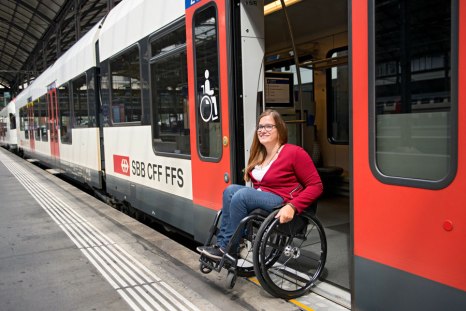 Level platform boarding is widely regarded as important and needed to improve operating efficiency and attract new riders. Level boarding will also materially assist mobility-impaired riders, improve safety, reduce station dwell times, and increase train schedule reliability.
Since passenger trips on Caltrain average about 24 miles, level boarding means each passenger’s trip time would drop between 3 and 9 minutes. In additional the reduction in loading times would allow a significant reduction in the train scheduling slack now required because of curb-level boarding. We strongly encourage Caltrain to place a high priority on level boarding.
Concluding Comment: Caltrain is facing a complex transitioning to electric train operation and the equally challenging task of dramatically increasing ridership to avert future large deficits. Maintaining a results-oriented focus and firm implementation schedule will be essential to achieving a a successful outcome.
 Bay Area Transportation Working Group