
California seems determined to rush into hydrogen-powered cars, trucks, ships, buses, trains, airplanes, you name it. Never mind that today 95% of the country’s supply of hydrogen is made from fossil fuels. And never mind that every kilowatt of green energy (from wind or solar) that is devoted to making hydrogen would be a kilowatt not available to meeting some other energy need.
What about efficiency? Does anyone in Sacramento care? According to Mechanical Engineering Professor David Cebon of Cambridge University, with the thermal energy loss of manufacturing, transporting and consuming the hydrogen thrown in, the average hydrogen-powered vehicle would operate at 30% efficiency, compared to a battery-operated vehicle that operates at 59% efficiency. Even hybrids do better than 30%. https://www.youtube.com/watch?v=JlOCS95Jvjc
Read more here
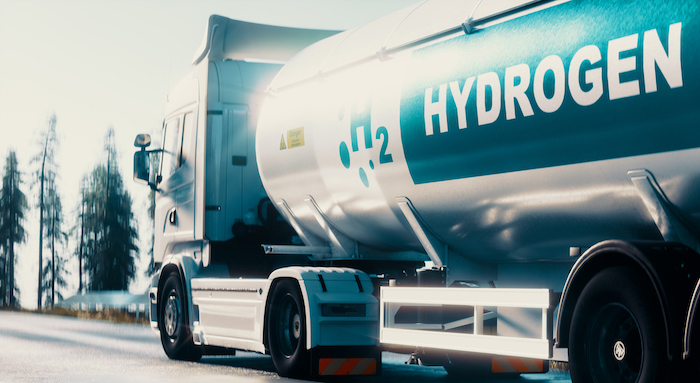
Despite this, California seems poised to plunge blindly ahead, in significant part because of the lure of “free” outside money from the federal government. (“Never mind the cost or future practicality of a program; if money’s available let’s spend it!”, is a common slogan). California’s Governor, ever eager to portray California as “leader” when it comes to anything that’s new and different, last month announced his plan for a “statewide hydrogen energy strategy”. In an article by Calmattersentitled “California May Spend up to $300M for Hydrogen Car Fuel Stations. Why?” published on August 27, 2023, Governor Newsom is quoted as saying:“California is all in on clean, renewable hydrogen—an essential aspect of how we’ll power our future and cut pollution”. Solyndra comes to mind.
As pointed out by Sasan Saadat, Earth Justice Senior Research and Policy Analyst, who was a co-panelist on August 31, 2023 with Professor Cebon at a webinar sponsored by the Climate Center, for a wind and solar system to be effective It must “conform to three pillars”. First, the system must be “in addition to” a base network of electric power sources that is reliable at all times, even when the sun is not shining and the wind not blowing. Second, it must be “deliverable”, meaning that the power produced must get to where it is needed. And third, there must be a “time-hour match”, meaning that the produced electric power must get to where it’s needed, when it’s needed.
In the US, today’s wind and solar installations come nowhere close to fulfilling those requirements. A hydrogen-based transportation program, because of its significant use of fossil fuel and general inefficiency, would make matters worse, not better.
When a private business goes down the wrong road, it is the business that gets muddy. When governments, at the urging of corporate beneficiaries, weigh in with offers of large federal and State subsidies, things invariably get out of whack and everyone suffers.
Yet both the federal and California’s governments appear to be pushing for H2-powered vehicles. Why? Where’s the beef?! They should be called upon to justify their actions. There are much better ways to go.
 Bay Area Transportation Working Group