
There is no doubt that BART provides a highly popular transportation service and is therefore a key element in providing mobility without people having to drive everywhere they go. For this, BART is of inestimable value to the Bay Area.
But at what cost?
Building BART was an extremely costly undertaking. Expanding it continues to be vastly more costly than it should be, as evidenced by the Federal Transportation Administration’s estimated cost of $9.15 billion for the BART Phase II subway through downtown San Jose. Operating BART is similarly over-priced and the Link 21 project is proceeding as if the sky’s the limit. Here are three separate windows through which a reader can see what’s going on at BART:
 As part of its work the MTC reviewed past rail project delivery models in the Bay Area, as well as those used in the Toronto Ontario region and in London.
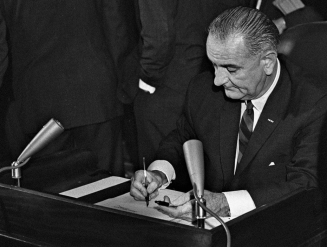 Pursuant to the passage of the Urban Mass Transportation Act in 1964, federal funds began to be directed to various local and regional transit improvement projects. To avoid the heavy-handed and physically taxing involvement of the federal government in thousands of local and regional projects, Metropolitan Planning Organizations (MPO’s) were established across the country.
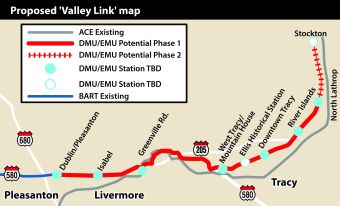 Any rational observer would take this to mean connecting BART to Livermore and ACE in a manner convenient to train riders and would-be train riders. But the TVSQVRRA, we later learned, had other plans. Instead of a viable connection between BART and ACE in Livermore, TVSQVRRA wants to build a 43-mile Valley Link line extending from BART’s East Dublin terminal to North Lathrop, over 30 winding track miles northeast of Livermore.
 Bay Area Transportation Working Group