
Voters in Sonoma and Marin counties approved a sales tax obligation in 2008 to plan, build and operate the Sonoma Marin Area Rail Transit 70-mile commuter rail system from Cloverdale to about 3/8 mile from the Larkspur Ferry Terminal. The 70 mile plan did not pan out, with SMART beginning 42-mile rail service from Santa Rosa to San Rafael in mid-1917, and extending to Larkspur in late 2019.
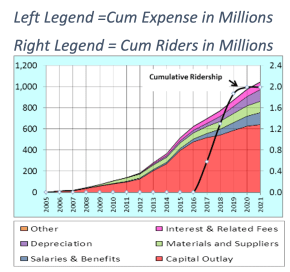
As of Dec 2021, the cumulative cost to build, operate, and finance SMART totaled $1 Billion while the cumulative total ridership was approximately 2 million one-way passenger trips. That works out to about $500 for every one-way passenger trip, so far!
Every transit operator reports data monthly and annually to the National Transit Database (NTD) maintained by the Federal Transit Administration. The NTD data is the source for uniformly reported statistics on operating expenses, passenger trips and passenger miles, fare revenues and the number of vehicle miles and hours of service provided. Below is the history for SMART.
 On November 15th the MTC Fare Integration Task Force (Task Force) adopted a fare integration statement to help Bay Area transit agencies deliver a fairer and better-coordinated fare collection system for the Bay Area.
 While BATWG has never joined the chorus chanting for a single humongous bureaucracy to take over and operate all of the Bay Area’s 27 separate transit agencies, we do recognize that there are opportunities to effectively combine some services and the small systems in Sonoma County definitely qualify.
 Bay Area Transportation Working Group