Transportation Agency Performance

At the present time transit agencies across the country are hurting. Ridership is down and funding is scarce. To keep themselves in the financial game, the large Bay Area transit agencies, backed by MTC, the public employee unions, business groups, developers, consultants and contractors, have been quite aggressive in seeking additional State and federal funding in order to keep their doors open.

On top of the just announced State funding (and previously approved federal grants), there are new plans afoot to enact another Bay Area transit tax measure. That’s because even with the federal grants and state aid, the transit agencies in this region will almost certainly run significantly short on funding by 2026 or 2027.

What’s missing in all this is the tough and innovative thinking required for the benefiting local and regional agencies to become more effective stewards of the public funding that comes their way.

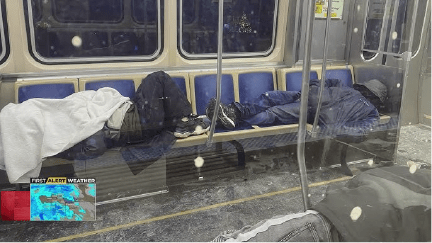
Waiting comfortably for funding

Continue reading

Coping with Rampant Fare Evasion

Things have gotten out of hand – way out of hand.

It has been shown that fare evaders are more likely to commit crimes while on board transit vehicles than paying customers. BART sources say that while the actual amount of fare evasion is unknown (estimates range from 20% to 40%), what is known is “that virtually everyone arrested for criminal behavior on a BART train is also a fare evader.”

Needless to add, criminal activity aboard transit vehicles does not attract new riders. In many cases it isn’t just the criminality that turns people away from transit use. A large percentage of the residents of the Bay Area are used to comfort and safety. For this reason (whether socially acceptable or not), many will not willingly sit down or ride with people who are dirty, unduly noisy, disruptive, combative, hostile or plain obnoxious. It’s just not going to happen.

Continue reading

Should Commuter Rail Systems Carry Passengers?

Why would anyone ask such a question? It seems obvious that the purpose of a commuter rail system is to carry passengers.

Yet the Sonoma Marin Area Rail Transit District’s (SMART’s) application for $468 million in State of California funding to extend its rail line north from Windsor to Cloverdale says absolutely nothing about ridership. SMART’s 118-page application for funding from the California Transit and Intercity Rail Capital Program includes details about the proposed rail extension, as well as a new bike/pedestrian pathway along the rail alignment but says nothing about the degree to which its new rail extension would be used.

SMART commenced commuter rail service between Santa Rosa and San Rafael in August 2017. Its cumulative (capital plus operating) expenditures between that date and June of 2022 were over $1.11 billion. The most recently published data, for FY21-22, shows over $78 in operating expense for every one way passenger trip, with only $3.61 of that expense paid for by the passenger, leaving the other $74.39 per trip for the tax payer to pay.

Continue reading

Needed Transportation Agency Changes

Needed from MTC:  The in-house efforts at MTC to tackle some of the Region’s knottiest problems are commendable but the MTC Staff leadership needs to become more pro-active when it comes to recognizing regional problems and acting to help resolve them when the need arises. It needs to become more assertive and more professionally independent when it comes to determining what makes regional sense and what doesn’t. It needs to become more directly involved when regional problems are proving difficult for individual transit agencies to resolve. To ensure consistently smart and productive utilization of tax dollars for the benefit of the entire region, it will be necessary for the MTC commissioners and above all its professional staff leadership to dedicate themselves to independent objective thinking and effective regional coordination.

Needed from the Large Transportation Bureaucracies:  They can also do better. To be seriously considered, proposed capital improvement projects should be both compatible with regional planning objectives and genuinely cost effective. The staff leaderships of the large transit agencies need to react in a consistently objective and otherwise professional way to each proposed project regardless of the source of the proposal. They should also commit themselves to consistently meeting high standards of administrative efficiency and management effectiveness.

Parochial projects sometimes have their place, but the failure during the last 45 years of the Bay Area’s large transportation agencies to use their incoming tens of billions of dollars to gradually bring about an effective regional transit alternative to the automobile is inexcusable.

Continue reading

A BATWG Letter to the San Jose Mercury News

Sent to Columnist Gary Richards and published in the San Jose Mercury:

Dear Mr. Richards,

A couple of your readers are a little mixed up about the Caltrain extension to the Salesforce Transit Center. In 1999, 69.3% of the San Francisco voters voted for Proposition H approving this extension to downtown San Francisco. The cost of getting the trains up and running into the waiting Salesforce Transit Center was recently reported as being $5 billion, a significant portion of which has already been raised from San Francisco, regional and State sources.

Unfortunately, a handful of greenhorn planners in the San Francisco Department of City Planning have for years been trying to slip their proposed but unvoted-upon $3 billion Pennsylvania Avenue subway quietly under the umbrella of the Caltrain extension project. If this uniquely ill-conceived “add-on” were ever built, it would become the single most expensive grade-separation in the entire world. There is no reason for creating two to three miles of subway 100 feet west of the at-grade tracks where Caltrain currently operates. Given the fact that these tracks north of Potrero Hill are appropriately located directly under the massive I-280 freeway viaduct, the tracks and trains blight nothing. The 16th Street/ railroad grade crossing is troublesome, but it could be eliminated by depressing a short section of 16th Street for as little as five percent the cost of the subway.

Adopted Caltrain Budgets and Looming Future Deficits

The Caltrain budget for FY2024 and FY2025 was adopted by the Board on June 1, 2023. The FY2024 budget shows Caltrain’s average daily ridership as increasing from today’s roughly 18,600 riders per weekday to a projected 28,300 average riders a weekday in 2024. We regard this projection to be unrealistic.

Despite the fact that only 92 Caltrain trains per weekday operated pre-pandemic, at a time when Caltrain’s ridership was almost four times what it currently is, the Budget shows Caltrain as continuing to run 104 trains per weekday in FY2024. In part because of this increase in the size of the operation, the FY2024 budget shows operating expenses as increasing by 6.7% and administrative expenses by 21% over the FY2023 level.

Continue reading