By now everyone who reads a newspaper or listens to a radio knows that major transit agencies across the nation are heading toward a “fiscal cliff”
Large Bay Area public transit operators like BART, SFMTA, SCVTA, AC Transit, Caltrain, SamTrans and Golden Gate Transit have seen their riderships and fare revenues drop precipitously while operating costs increase and tax revenue sources dry up.
If a private business operating in a competitive environment were faced with this situation it would be required to find ways of raising revenues and/or cutting costs, or facing the prospect of having to close its doors. With a public agency, things are different. When a large bureaucracy is faced with the same problem it seldom looks very hard if at all for cost-cutting opportunities. Instead, there is a strong tendency on the part of most agencies, backed by labor interests, business groups, and other advocates, to sit and bewail the situation while demanding more tax money from other levels of government.
In any event, transit has fallen on hard times and the question is what to do about it.
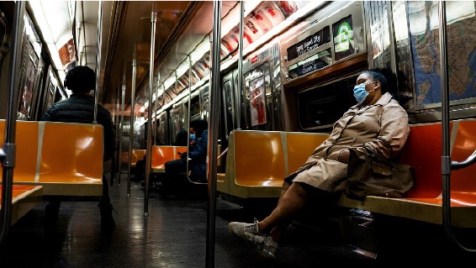
Need for Better and More Prudent Cost Control: Transit provides an important public service and for this reason needs and deserves taxpayer support. But that’s not the whole story. There is also a need for the transit agencies themselves to look for opportunities to increase their farebox revenues and reduce their administrative and operating costs. As things stand, transit agencies and their Boards of Directors focus too much on “new or additional revenue sources” and not enough on improving existing service, cost-effectiveness, controlling operating and administrative expenses and sound management. But what used to be tolerated may no longer be. Given the State of California’s $31.5 billion deficit and the even greater national fiscal woe, the hoped for State and federal bailouts may not materialize. If so agencies that fail to streamline their operations may be putting themselves at substantial risk.
Continue reading →


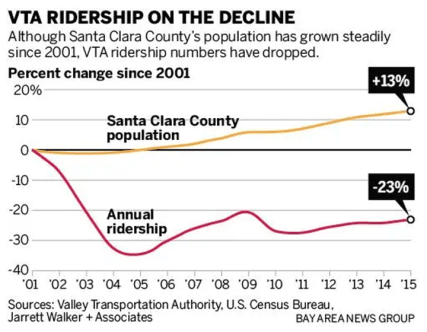 Unfortunately, the VTA’s ridership forecasts have proven to be no more accurate than its cost estimates. Back when the BART extension was first being promoted zealots were projecting 70,000 riders a day or more by 2040. The VTA later reduced these rosy early projections to a total of 54,600 riders a day at the four Phase II stations. On April 14th the San Jose Mercury reported that a new federally-mandated forecast had dropped the projected 2040 ridership by another 40% to just 32,900 riders a day.
 Bay Area Transportation Working Group