
Instead of moving the project forward, the Region backpedals. The recently-formed “Executive Steering Committee” is comprised of staff representatives from the Metropolitan Transportation Commission (MTC), Transbay Joint Powers Authority, SF County Transportation Authority, SF Mayor’s Office, Peninsula Joint Powers Authority (Caltrain) and the California High Speed Rail Authority.  They and their consultants have returned to reviewing such long-settled matters as the routing of the extension, an ill-conceived and unneeded Pennsylvania Avenue subway, the number of tracks leading into the Salesforce Transit Center (already studied and resolved twice) and the possible interface in the distant future between the Salesforce terminal and a second subaqueous rail tube, if one is ever built.
All this for a project approved by all relevant local, regional, State and federal agencies and jurisdictions over 12 years ago that received its State and federal environmental clearance in 2009.

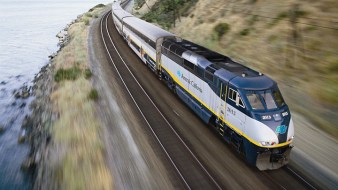 The Capitol Corridor system affords a comfortable and reliable way of getting from Auburn via Sacramento, Davis, Martinez, Richmond, Oakland and Newark all the way into Silicon Valley. However, Capitol Corridor trains are currently detoured from the main Coast Starlight route through eastern Hayward and Union City and then along 5 miles of east-west track to rejoin the main line in Newark and for the remainder of the trip to Silicon Valley. Since the East Hayward/Union City route closely parallels BART the detour never did make much sense. And now, with BART being extended through downtown San Jose and all the way to the Diridon Station, it makes even less sense.
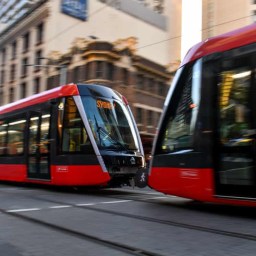 Fully automated coupling of the K’s to the M’s at St. Francis Circle and of the J’s to the N’s at the Duboce Portal would achieve this objective by allowing for fewer but longer J/N K/M, N and shuttle trains to operate in the subway.
 People say that the number one reason they don’t use public transit is because “it doesn’t get me where I want to go”. Opportunities to improve the currently disjointed and gap-filled Bay Area network of trains and buses abound. “Seamless Transit”, intended to address this problem, so far hasn’t proceeded beyond the talking stage. Here are some examples of what’s gone wrong and what could go right:
 Bay Area Transportation Working Group