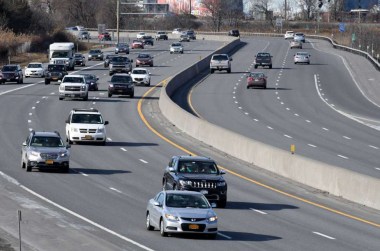
 Those responsible for continually increasing the car-carrying of Bay Area highways for the last four decades are said to be justly proud of the fact that their freeways are now at last fully functional.
Between pandemics, not so much.
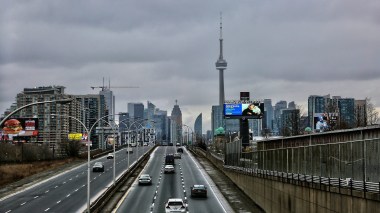


Those responsible for continually increasing the car-carrying of Bay Area highways for the last four decades are said to be justly proud of the fact that their freeways are now at last fully functional.
Between pandemics, not so much.
Because of COVID-19 we are no longer passing out survey notices at BART stations. However you can still take the survey, from home.
If you are or were a BART rider think back to how things were before the current crisis. Were things ok? How could they have been better? You can find the survey by going to BATWGblog.com and clicking “BART Survey.”
Please tell your friends and associates about the opportunity to weigh in. Anyone who is or was riding BART is eligible. And now would be a great time for BART to bear down on cleaning up its act.

Sooner or later things will get back to “normal.” Or will they? What will the new normal be? Will people revert to their previous practice of traveling alone even if it means more years of 3 and 4 stressful hours a day lost to commuting? It’s an open question. Some people are finding that they much prefer working at home to traveling to distant and perhaps risky offices. But is it practical to work at home? Can people be as productive? What about the small city businesses that depend upon an incoming flood of commuters every day? Who gets hurt in case many office workers are located elsewhere?
The Current Approach: Right now everything is in an existential muddle. Some say that jamming high density housing near transit stops in established neighborhoods will solve the problem. This lunacy is based upon the false premise that putting housing near transit will by itself ease traffic. Others say that continuing to permit each town and city to set its own zoning and land use standards is the most democratic, and therefore the only way to go. And then there are those who have convinced themselves that to accommodate increasing population, the growth of the sprawling low-density suburbs should continue indefinitely. (If clogged highways and insufferably long commute times was the objective then this approach has worked brilliantly. However if there are ever to be short commute times and an easing of gridlock it will require a new and more enlightened approach.) Still others are demanding that the large corporations whose hordes of incoming employees largely caused the current mess should step up to the plate and fix it. (It has been suggested that the only time California’s metropolitan highways work is during a pandemic.) Each of these approaches responds to the Bay Area’s Housing/Transportation Crisis in a different way. Taken alone, none of them makes any sense and none is acceptable.
(updated May 9, 2020)
Last month BATWG wrote an article about the North Bay voter’s decisive rejection of the Sonoma Marin Area Rail Transit District’s (SMART’s) proposal to extend its sales tax for an additional 30 years through 2059. At the time we did not foresee the worldwide economic ravages of the Coronavirus pandemic nor its devastating effects on public transportation. The Coronavirus pandemic has upended every transit system in the USA.
Like other transit providers, SMART must undertake rapid policy and operations changes to meet the new conditions. Unfortunately, as discussed last month and below, SMART’s financial and rail operating circumstances were already much more in disarray than those of other Bay Area transit providers. Even before COVID there was already an overwhelming need for the District to put its financial house in order.

The workshop was scheduled to occur at the end of May. However because of the national shutdown it was necessary to cancel the event. As soon as the coast is clear we will announce a new workshop time, place and date.
 Bay Area Transportation Working Group