
With its plan both to run diesel and electric trains between Gilroy and San Francisco, Caltrain appears to be facing a major dilemma of its own making. If implemented this ill-conceived plan would both significantly delay the long-awaited level boarding north of San Jose’s Diridon Transfer Station and, by having to continue operating both electrics and diesels, make the Caltrain operation significantly more costly than it otherwise would be.
Caltrain is…and has long been…in the politically difficult position of trying to operate a coherent commuter rail service through three California counties, each with active constituents, often at odds with one another. This is further complicated by the fact that even though Caltrain passes through three Bay Area Counties and is therefore a regional system, there has been little if any regional involvement in resolving the resulting regional problems.
 Despite these handicaps it is essential that Caltrain’s actions during the next five years be pursuant to a carefully thought- out, unifying strategy. Unfortunately, there is at this time little evidence that such a strategy exists.
Read more here
Caltrain is committed to putting its new fleet of electrified vehicles into commercial operation by the Fall of 2024. It is anticipated that this will both speed up and otherwise improve service and reduce costs. One of the key elements in holding the line on Caltrain costs is in getting out of the diesel rail business asap. Unfortunately, the electrified portion of the line goes only as far south as the Tamien Station (just 2 miles south of Diridon), leaving the small number of riders (200 to 300 boardings a day) traveling along the 29- miles between Tamien and the Gilroy Transit Center without electrified service.
Instead of working with the VTA to provide an upgraded bus system for this handful of riders, the current plan seems to be that Caltrain continue to send diesel trains to Gilroy for the foreseeable future. In fact, it appears that despite the $2.4 billion being spent to electrify the 50-miles of line between Tamien and the Fourth and King Station in San Francisco, diesel trains will continue, along with the new electrified Stadler trains, to go all the way to San Francisco. If so, this means that beginning in late 2024 north of Tamien Caltrain would be operating both diesel trains and electrified trains, each with its own separately trained operators, maintainers, maintenance and storage facilities, protocols and lines of spare parts.
Even if it were deemed necessary for political reasons to maintain diesel service south of Diridon there is no reason to continue sending the diesels to San Francisco. Instead, the small number of riders south of Tamien bound for points north of Diridon could make efficient timed transfers between trains. Transfers between trains are common all over the world.
As indicated, another disadvantage of continuing diesel operations to San Francisco is how it would affect Caltrain’s program for achieving level boarding. All of today’s trains are accessed from low platforms, 8 inches above the top of the rails. However, the incoming Stadler Electrified Multiple Units (EMU’s) will be accessible by level boarding from new platforms 22 inches above rail. Level train boarding would greatly enhance the operation by reducing loading times, cutting operating costs, improving passenger safety and making travel much easier for the elderly and handicapped.
To further complicate matters Caltrain is apparently planning to start a pilot project featuring four battery-operated electrified train cars (BEMU’s) capable of operating on the 29 miles of unwired trackage between Tamien and Gilroy. This development is being billed as the way to get out of the diesel rail business. The problem is that it will be three or four years before the pilot operation can be put into revenue service and then, if it is deemed to be effective and safe, several more years to complete the process of replacing the remaining diesel trains with BEMUs.
And all this during a time that because of COVID and for other reasons, Caltrain’s financial ability to keep its trains running is now seriously in doubt.
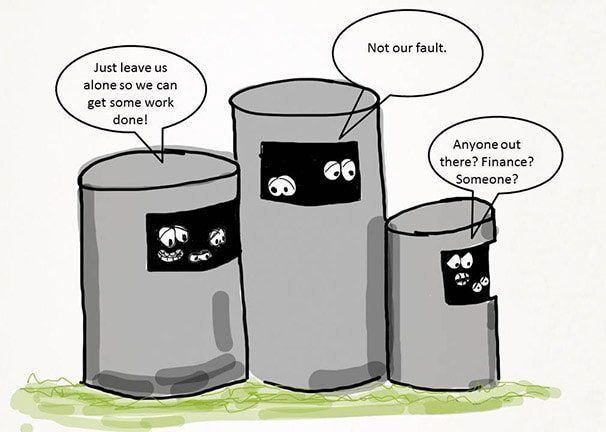
Trying to find a Caltrain representative able to articulate a single coherent policy guiding its massive development program has proven to be extraordinarily difficult. One individual can talk about BEMU’s. Another can provide schedules showing how the electrication is going to be complete by the Fall of 2024. A third can present a breakdown of how much the job will cost and how it will be financed. But can anyone explain how so cumbersome and costly a mix of diesel trains, wired EMU’s and incoming experimental BEMU’s can all operate togther efficiently enough to avoid breaking the Caltrain bank? It would seem not.
 Bay Area Transportation Working Group
Caltrain has ordered its Swiss train builder Stadler to build it a *single* demonstration/pilot 4-car EMU with enough rechargeable batteries to run “off-wire” on un-electrified UP-owned tracks to Gilroy and even Salinas. From drawings, it appears one of the 4 cars (a cab car) will be dedicated to housing batteries and other equipment — so from a passenger’s perspective, it’s really only a 3-car train. A production, testing, certification, and delivery schedule is still TBD, but Caltrain staff has said delivery won’t be until sometime after 2027.
LikeLike
In mid-September Caltrain unveiled its proposed initial schedule & service plan for the Fall of 2024, when electric revenue service is set to begin. Notably, there will be no regularly scheduled diesel trains between SF & SJ. They will instead be confined to serving Gilroy, with cross-platform transfers to EMUs at San Jose’s Diridon station:
Details here: https://www.caltrain.com/media/31693/download
A major improvement; I hope they’re on a roll.
LikeLike
And in August, there was also this: Battery train to take Caltrain electric operation beyond the wires https://www.railwaygazette.com/traction-and-rolling-stock/battery-train-to-take-caltrain-electric-operation-beyond-the-wires/64754.article
LikeLike
They now have apparently decided to run the BEMU’s only south of Diridon…with battery charging occurring at Diridon and/or the Gilroy Transit Center. Comes as good news.
LikeLike