
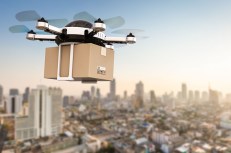
Since COVID hit, you may have been pleasantly surprised to see how fast a product ordered through the internet can arrive at your doorstep. Why is that? What’s changed?
The fact is that thanks to a rapidly improving set of internet based, sophisticated computer-control measures, suppliers, forwarders, shippers, and distribution companies are adopting much better ways of keeping track of freight shipments than in the past. One of the benefits of a fast, responsive and efficient internal control system is that rather than having to ship everything from the factory or some other central location, suppliers can now set up and use more local and regional storage centers located closer to demand centers without losing track of their products. This can now be accomplished by sophisticated data analysis used to convert demographic trends, consumption records and advertising “hits” to input data suitable for entry into computer models capable of more closely monitoring freight shipping and storage.
 Early in the pandemic, Twitter announced that its employees could permanently operate from home. Facebook CEO Mark Zuckerberg foresees half his workforce doing the same. And Google is exploring a permanent hybrid plan that would allow workers to split their time between their homes and offices.
 Bay Area Transportation Working Group