Avoiding the Impending Bay Area Stall

Highway backups are increasing. Despite the hoopla, auto and truck use in the Bay Area continues to increase. People talk of trains, but trains can’t go everywhere. They’re too expensive for one thing. Along highways, arterials and busy streets one constantly sees buses bogged down in traffic. Do you think San Francisco is in the forefront of getting its buses out of traffic? If so check out the grey bus-only lines on this map of Minneapolis.

To make matters worse the interiors of urban buses are often dismally uninviting. On Muni buses for instance the ride is so rough that it’s virtually impossible on many routes to any longer read a magazine or book. On these routes the hard plastic seats are so bad that many riders say it’s now more comfortable to stand than sit.

Private industry, with its “hi-tech” buses figured this out years ago and as a result, the interiors of the hi-tech units are comfortable and well-appointed.

As one might expect, uncomfortable buses stalled in traffic invariably push people back to traveling by automobile. MTC has projected that between 2015 and 2025 the number of Bay Area auto trips will increase by 10% and between 2025 and 2030 by another 12%. With commutes getting steadily longer it’s not hard to see what this does to vehicle miles traveled, traffic congestion and greenhouse gas emissions. In short, travel in the Bay Area is already bad and, if practical steps are not taken, will get steadily worse.

The following five actions would help:
Continue reading

Future Connections between Oakland & San Francisco

It’s been clear for decades that another way of crossing the Bay between Oakland and San Francisco will be needed when BART runs out of peak-period transbay carrying-capacity. It is now estimated that this capacity limit will be reached before 2030. Thankfully the “Powers” have at last begun their planning. However, given the glacial pace of Bay Area infrastructure development, the needed supplemental system won’t be up and running until 2060 or later. So how, one might ask, do Central Bay Area transit leaders plan to cope during the intervening 30 or more years? If anyone knows the answer to this rather important question, he or she is keeping mum on the subject.

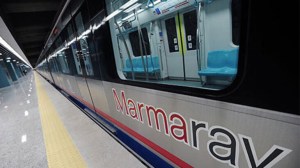
Turkey’s Marmaray Underwater Tunnel

Here are a few observations designed to speed things up:

Continue reading

Riders Yin while SF BART Board Members Yang

Last year BART conducted a survey of its riders. The survey results revealed that between 2014 and 2018 general rider satisfaction with BART dropped by 18%, from 74% to 56%. Rider responses were elicited in response to 46 separate elements of BART’s service. The Clipper Card got the highest rating. High ratings were also given to the availability of maps and schedules, on-time performance and the frequency of BART trains.

To most riders it will come as no great surprise to learn that conditions in BART stations, interior on-car noise levels and cleanliness were much farther down the list. And it will come as even less of a surprise that the very lowest ratings included BART’s lax enforcement of its fare evasion problem, and the absence of adequate BART policing at stations, on trains and in BART parking lots. At the very bottom of the list was the riders’ strongly negative reaction to BART’s failure to address its homeless problem.

Continue reading

DTX Project Remains Entangled in SFCTA Maul

Here are excerpts from a dialogue that has been ongoing between the SFCTA and BATWG since the October 22, 2019 SFCTA hearing. It illustrates BATWG’s current assessment of the situation:

Excerpts from BATWG’s letter dated October 26th to the SFCTA:

At the October 22, 2019 SFTCA hearing much was made of 2028, the year by which the trains would be allegedly be carrying passengers to and from the Salesforce Transit Center. [Based upon the delays that have already occurred and that are continuing to occur], 2030 or later would be more realistic.

In any event there are two dates of far more immediate importance that were not mentioned on 10/22.

First, when will [the SFCTA let] the Preliminary Engineering and PE cost estimating work be restarted? While [we] believe that Mark Zabeneh is ready and able to do the work we realize that he may be cashiered, unfairly in our view. So the question becomes, when will someone be given the authority and funding needed to commence preliminary engineering? When will the SFCTA get serious about restarting the DTX project?

Empty Transit Center Train Terminal Sits Waiting…

Second, when will a bonafide preliminary engineering cost estimate be available for all to see? Given the uncertainties and confusion created by the past and continuing delays, the potential funding sources have understandably adopted a wait-and-see attitude. Clearly defining the project is an essential first step to restarting the project, and that requires a completed PE.

Excerpts from a subsequent exchange of letters between SFCTA and BATWG: Continue reading

Getting Serious about the Market Street Subway

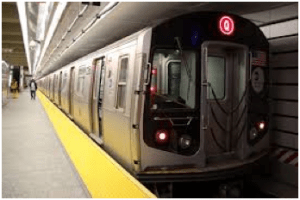
New York subway train

As has been pointed out before, the Muni level of the Market Street subway is currently operating at less than half its peak-period passenger-carrying capacity. That’s because 20 years ago, instead of coupling the one and two-car trains operating along the Avenues (namely the K,L,M,J, N trains) into longer trains suitable for subway operation, the Muni gave up on the coupling. So now it operates one and two car trains in the subway as well as on the Avenues, therefore sending many fewer LRV’s through the tunnel than needed during peak commute periods.

In an attempt to counteract the resulting overcrowding, the SFMTA tries to push as many of its short “trains” into and through the subway as possible. This has not worked.

Continue reading

Does the BART Board protect the Riders?

How do most BART riders feel about the fare evasion and bad and often illegal behavior that is frequently experienced on BART trains and in and around BART stations? It appears that certain members of BART’s Board of Directors members are convinced that most BART riders don’t mind. Unfortunately there is still no definitive data on the subject. However, from talking to friends, family members and other BART riders we’ve found that many people who would like to ride BART and who should be riding BART are responding to these adverse conditions by turning to less efficient and less environmentally-benign forms of travel.

The brand of disruptive chaos that often mars BART travel is seldom seen in privately-owned establishments, or even in public ones for that matter. Walk into any City Hall. Except for the occasional protest, things tend to be calm and orderly.
Continue reading