
Needed Transportation Agency Changes

Needed from MTC:  The in-house efforts at MTC to tackle some of the Region’s knottiest problems are commendable but the MTC Staff leadership needs to become more pro-active when it comes to recognizing regional problems and acting to help resolve them when the need arises. It needs to become more assertive and more professionally independent when it comes to determining what makes regional sense and what doesn’t. It needs to become more directly involved when regional problems are proving difficult for individual transit agencies to resolve. To ensure consistently smart and productive utilization of tax dollars for the benefit of the entire region, it will be necessary for the MTC commissioners and above all its professional staff leadership to dedicate themselves to independent objective thinking and effective regional coordination.

Needed from the Large Transportation Bureaucracies:  They can also do better. To be seriously considered, proposed capital improvement projects should be both compatible with regional planning objectives and genuinely cost effective. The staff leaderships of the large transit agencies need to react in a consistently objective and otherwise professional way to each proposed project regardless of the source of the proposal. They should also commit themselves to consistently meeting high standards of administrative efficiency and management effectiveness.

Parochial projects sometimes have their place, but the failure during the last 45 years of the Bay Area’s large transportation agencies to use their incoming tens of billions of dollars to gradually bring about an effective regional transit alternative to the automobile is inexcusable.

Continue reading

A BATWG Letter to the San Jose Mercury News

Sent to Columnist Gary Richards and published in the San Jose Mercury:

Dear Mr. Richards,

A couple of your readers are a little mixed up about the Caltrain extension to the Salesforce Transit Center. In 1999, 69.3% of the San Francisco voters voted for Proposition H approving this extension to downtown San Francisco. The cost of getting the trains up and running into the waiting Salesforce Transit Center was recently reported as being $5 billion, a significant portion of which has already been raised from San Francisco, regional and State sources.

Unfortunately, a handful of greenhorn planners in the San Francisco Department of City Planning have for years been trying to slip their proposed but unvoted-upon $3 billion Pennsylvania Avenue subway quietly under the umbrella of the Caltrain extension project. If this uniquely ill-conceived “add-on” were ever built, it would become the single most expensive grade-separation in the entire world. There is no reason for creating two to three miles of subway 100 feet west of the at-grade tracks where Caltrain currently operates. Given the fact that these tracks north of Potrero Hill are appropriately located directly under the massive I-280 freeway viaduct, the tracks and trains blight nothing. The 16th Street/ railroad grade crossing is troublesome, but it could be eliminated by depressing a short section of 16th Street for as little as five percent the cost of the subway.

Adopted Caltrain Budgets and Looming Future Deficits

The Caltrain budget for FY2024 and FY2025 was adopted by the Board on June 1, 2023. The FY2024 budget shows Caltrain’s average daily ridership as increasing from today’s roughly 18,600 riders per weekday to a projected 28,300 average riders a weekday in 2024. We regard this projection to be unrealistic.

Despite the fact that only 92 Caltrain trains per weekday operated pre-pandemic, at a time when Caltrain’s ridership was almost four times what it currently is, the Budget shows Caltrain as continuing to run 104 trains per weekday in FY2024. In part because of this increase in the size of the operation, the FY2024 budget shows operating expenses as increasing by 6.7% and administrative expenses by 21% over the FY2023 level.

Continue reading

BART Addresses Rampant Fare Evasion, Finally!

The transit agencies are finally recognizing and beginning to respond to the fact that fare evasion often leads to unruly and criminal on-car behavior which in turn drives paying customers away.

Take BART for instance. Three years ago its board scoffed at the idea of cracking down on fare evasion. As one Director put it, “if someone doesn’t pay it’s because they can’t afford to, so let them be”.

This approach has not worked….anywhere. If there are no consequences for cheating or breaking the law, some individuals invariably take advantage of the situation. That’s just the way it is. Everywhere. In all situations.

Continue reading

How Not to Approach a Fiscal Cliff

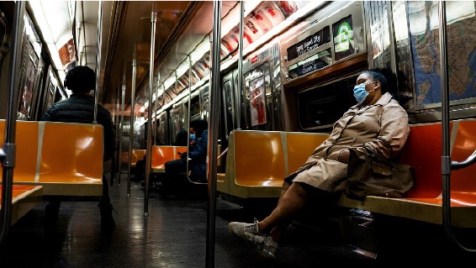
By now everyone who reads a newspaper or listens to a radio knows that major transit agencies across the nation are heading toward a “fiscal cliff”

Large Bay Area public transit operators like BART, SFMTA, SCVTA, AC Transit, Caltrain, SamTrans and Golden Gate Transit have seen their riderships and fare revenues drop precipitously while operating costs increase and tax revenue sources dry up.

If a private business operating in a competitive environment were faced with this situation it would be required to find ways of raising revenues and/or cutting costs, or facing the prospect of having to close its doors. With a public agency, things are different. When a large bureaucracy is faced with the same problem it seldom looks very hard if at all for cost-cutting opportunities. Instead, there is a strong tendency on the part of most agencies, backed by labor interests, business groups, and other advocates, to sit and bewail the situation while demanding more tax money from other levels of government.

In any event, transit has fallen on hard times and the question is what to do about it.

Need for Better and More Prudent Cost Control:  Transit provides an important public service and for this reason needs and deserves taxpayer support. But that’s not the whole story. There is also a need for the transit agencies themselves to look for opportunities to increase their farebox revenues and reduce their administrative and operating costs. As things stand, transit agencies and their Boards of Directors focus too much on “new or additional revenue sources” and not enough on improving existing service, cost-effectiveness, controlling operating and administrative expenses and sound management. But what used to be tolerated may no longer be. Given the State of California’s $31.5 billion deficit and the even greater national fiscal woe, the hoped for State and federal bailouts may not materialize. If so agencies that fail to streamline their operations may be putting themselves at substantial risk.

Continue reading

Letter to Mayor London Breed

Letter sent to San Francisco Mayor London Breed and
Supervisor Engardia

Dear Mayor Breed and Supervisor Engardo,

Subject:  https://sfgov.legistar.com/View.ashx?M=F&ID=11909851&GUID=7962909D-F96A-41CD-BC72-229395819237

With the 1960’s ” freeway revolt” San Franciscans became more focused on protecting their city from crass, politically-motivated development. Many horrible projects, all fully backed by City Hall, that would have been highly destructive to the unique character of San Francisco were stopped: The planned 53-story US Steel Headquarters located on the waterfront next to the Ferry Building was never built. Nor was the 6 story Oceanic Properties Development that would have protruded 1,300 feet out into the Bay. Nor the proposed highway tunnel under Russian Hill. Nor was the International Market Center, slated to be the fifth largest building in the world, wrapped around the east side of Telegraph Hill. Nor did the Scott/Divisadero Freeway proceed. Nor the plan to transform Upper Market Street into an eight-lane thoroughfare. Nor raising the height limits in North Beach to 65 feet. And many more.

And the ticky tacky residential architecture that degraded cities throughout the world was nipped in the bud in San Francisco.

Political tinkering with the San Francisco Planning Code and watering down CEQA are guaranteed to start the same old wars all over again. San Francisco’s housing problems can be addressed without ruining the City in the process.

Please desist.


Gerald Cauthen PE


End of June 2023 Newsletter