Hydrogen is our Salvation: NOT!

California seems determined to rush into hydrogen-powered cars, trucks, ships, buses, trains, airplanes, you name it. Never mind that today 95% of the country’s supply of hydrogen is made from fossil fuels. And never mind that every kilowatt of green energy (from wind or solar) that is devoted to making hydrogen would be a kilowatt not available to meeting some other energy need.

What about efficiency? Does anyone in Sacramento care? According to Mechanical Engineering Professor David Cebon of Cambridge University, with the thermal energy loss of manufacturing, transporting and consuming the hydrogen thrown in, the average hydrogen-powered vehicle would operate at 30% efficiency, compared to a battery-operated vehicle that operates at 59% efficiency. Even hybrids do better than 30%. https://www.youtube.com/watch?v=JlOCS95Jvjc

Continue reading

Recent BATWG Letter to the SFMTA

August 28, 2023

Dear Director Tumlin,

In this letter we have listed several cost-cutting opportunities, some that you are already seeking to implement and others that do not appear to be under current consideration.

As you know, the financial fortunes of San Francisco, and therefore also of the SF Municipal Transportation Agency (MTA), have changed. From recent MTA reports it is clear that your organization has been struggling to find ways of coping with the new conditions under which you will be required to operate. However, it is unlikely that the financial crisis you face today will be resolved in the manner that fiscal difficulties have been resolved in the past. The MTA staff’s presentation at the MTA Board Workshop on 2.7.2023 included a pie chart showing that 65% of the MTA’s 2023 revenue is expected to come from the CCSF General Fund, and State and federal subventions. This is not reassuring. Given that the huge drops in downtown property values will soon result in corresponding drops in CCSF property and sales tax revenues, it is unlikely that the past level of General Fund subsidy to the MTA will continue. Moreover, given conditions in Sacramento and Washington DC, the hoped for State and federal subventions are by no means assured.

Continue reading

AC Transit: Nowhere to Go but Up

Back in 1985 AC Transit racked up an average of 245,000 unlinked trips (one-way riders) per weekday. By 2000 this average ridership had dropped to 225,000 riders a day. By 2019 the ridership had dropped again, this time to 182,000 riders a day. And then COVID hit. By 2021, the latest year for which the National Transit Database shows data, AC’s average ridership came in at just 65,000 one-way riders per weekday.

The AC Staff and Board of Directors have set out several times to make changes designed to attract more riders to its system. It’s now trying again, with an ambitious plan to respond to rider, and we hope also non-rider, needs.

On July 26, 2023 the Staff and its consultant reported on the status of this latest effort to the AC Board of Directors. It was an effective presentation and included several interesting revelations, followed by some very apt responses from the AC Transit Board.

Continue reading

Transportation Agency Performance

At the present time transit agencies across the country are hurting. Ridership is down and funding is scarce. To keep themselves in the financial game, the large Bay Area transit agencies, backed by MTC, the public employee unions, business groups, developers, consultants and contractors, have been quite aggressive in seeking additional State and federal funding in order to keep their doors open.

On top of the just announced State funding (and previously approved federal grants), there are new plans afoot to enact another Bay Area transit tax measure. That’s because even with the federal grants and state aid, the transit agencies in this region will almost certainly run significantly short on funding by 2026 or 2027.

What’s missing in all this is the tough and innovative thinking required for the benefiting local and regional agencies to become more effective stewards of the public funding that comes their way.

Waiting comfortably for funding

Continue reading

Coping with Rampant Fare Evasion

Things have gotten out of hand – way out of hand.

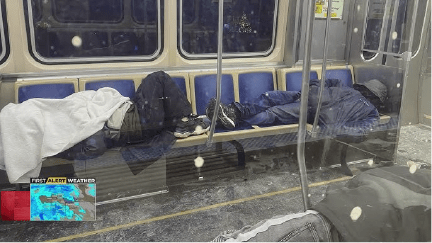
It has been shown that fare evaders are more likely to commit crimes while on board transit vehicles than paying customers. BART sources say that while the actual amount of fare evasion is unknown (estimates range from 20% to 40%), what is known is “that virtually everyone arrested for criminal behavior on a BART train is also a fare evader.”

Needless to add, criminal activity aboard transit vehicles does not attract new riders. In many cases it isn’t just the criminality that turns people away from transit use. A large percentage of the residents of the Bay Area are used to comfort and safety. For this reason (whether socially acceptable or not), many will not willingly sit down or ride with people who are dirty, unduly noisy, disruptive, combative, hostile or plain obnoxious. It’s just not going to happen.

Continue reading

Should Commuter Rail Systems Carry Passengers?

Why would anyone ask such a question? It seems obvious that the purpose of a commuter rail system is to carry passengers.

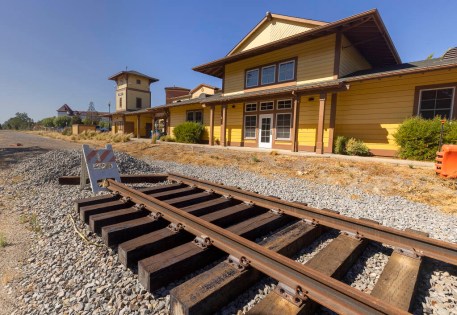
Yet the Sonoma Marin Area Rail Transit District’s (SMART’s) application for $468 million in State of California funding to extend its rail line north from Windsor to Cloverdale says absolutely nothing about ridership. SMART’s 118-page application for funding from the California Transit and Intercity Rail Capital Program includes details about the proposed rail extension, as well as a new bike/pedestrian pathway along the rail alignment but says nothing about the degree to which its new rail extension would be used.

SMART commenced commuter rail service between Santa Rosa and San Rafael in August 2017. Its cumulative (capital plus operating) expenditures between that date and June of 2022 were over $1.11 billion. The most recently published data, for FY21-22, shows over $78 in operating expense for every one way passenger trip, with only $3.61 of that expense paid for by the passenger, leaving the other $74.39 per trip for the tax payer to pay.

Continue reading